
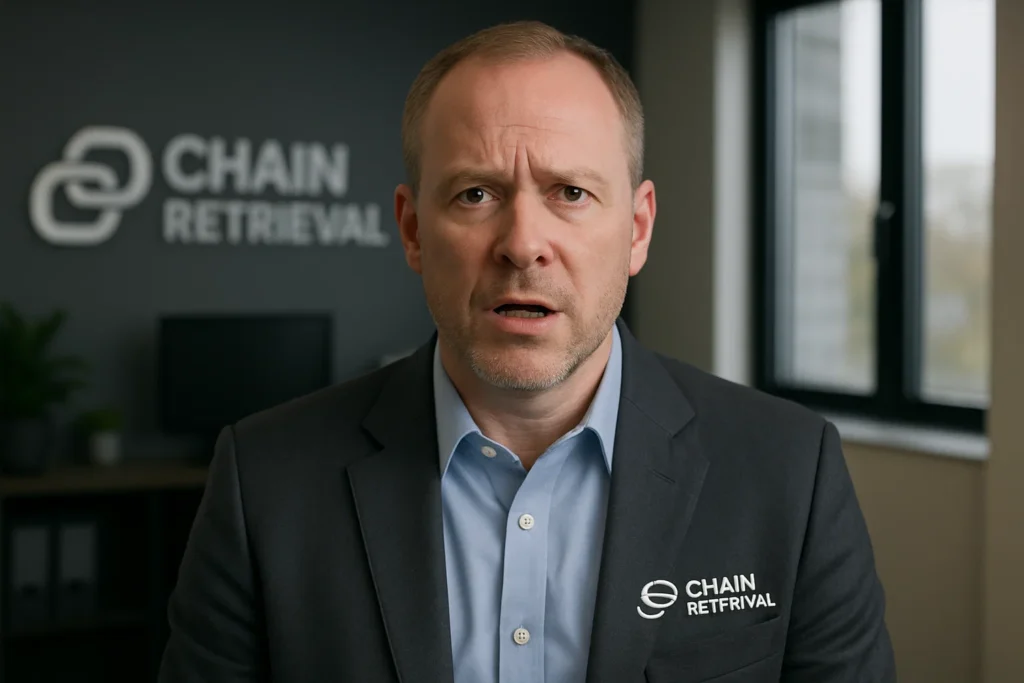
Crypto users are once again under attack—this time through fake emails pretending to come from trusted exchanges. In response, Chain Retrieval issues a warning to the public, urging everyone in Web3 to stay alert.
According to Chain Retrieval Chief Security Officer (CSO), these phishing emails closely mimic platforms like Binance, Coinbase, and Kraken. They appear legitimate but are designed to steal wallet access or trick users into signing malicious smart contracts.
The CSO stated that the team has already traced multiple reports linked to wallet drainers and scam domains disguised as customer support portals. Some of the emails include fake links requesting KYC updates, urgent withdrawal verifications, or login resets—none of which are real.
How Chain Retrieval Issues a Warning and Protects Users

As these phishing campaigns grow more sophisticated, Chain Retrieval issues a warning and provides actionable steps to prevent more users from falling victim.
Here’s how Chain Retrieval helps protect crypto users:
Real-Time Scam Alert System
Chain Retrieval monitors the Web3 ecosystem and blacklists domains that send scam emails or host malicious dApps.
Email Pattern Analysis
The system tracks mass phishing campaigns and alerts users when a fake email address or spoofed domain is detected.
Smart Contract Scanner
If users click links in scam emails and are prompted to sign a contract, Chain Retrieval can scan the contract for malicious functions before approval.
Wallet Risk Monitoring
Once connected, wallets can be monitored for abnormal activity such as unapproved token transfers or sudden permission changes.
📞 Free Case Review for Victims
If someone mistakenly interacted with a scam link or approved a malicious transaction, Chain Retrieval offers free case evaluations and potential recovery assistance.
By issuing early warnings and offering real-time protection, Chain Retrieval helps reduce the damage caused by phishing and wallet-draining scams.
What to Watch Out for in Scam Emails
To stay safe, users must learn how to identify common red flags. Chain Retrieval CSO advises checking for the following:
- Emails asking for seed phrases or private keys
- Suspicious urgency like “account suspended” or “withdrawal failed”
- Unusual domains such as
binance-secure-login.netorcoinbase-support.info Attachments or buttons that ask you to “verify your wallet”
If you see any of these signs, do not click or respond. Instead, report the email to your wallet provider or contact Chain Retrieval for guidance.
Protect Yourself Before You Become a Victim
With phishing scams on the rise, protecting your digital assets has never been more important. Chain Retrieval issues a warning not just to inform—but to help you take action.
Here’s what you can do now:
- Use a wallet with scam detection tools
- Never share seed phrases or passwords over email
- Enable wallet activity alerts
- Double-check links before signing anything
- Set up monitoring with Chain Retrieval to catch threats early
Need Help? Contact Chain Retrieval Today
If you suspect a scam email reached your inbox or you interacted with a fake dApp, contact Chain Retrieval immediately. Fast response increases your chances of recovery.
📧 Email: chainretrieval@gmail.com
📱 WhatsApp: +44 7951 606561
Chain Retrieval has helped users around the world trace stolen funds, recover assets, and stop attackers in their tracks.