

The crypto world has been hit with another costly scam.
This time, unsuspecting users on YouTube were lured into a trap by a fake crypto trading bot that drained 256 ETH — worth nearly $890,000. The scam disguised itself as a legitimate trading tool, gaining trust through high-quality video content and sponsored posts.
But behind the scenes, it was just another wallet drainer.
The bot appeared to offer automatic trading on decentralized exchanges. Users were promised fast profits and “hands-free” trading. But once they clicked the promoted link and connected their wallets, the smart contract silently transferred their ETH to the attacker.
This wasn’t just a phishing link — it was an advanced contract-based attack that took full control once access was granted.
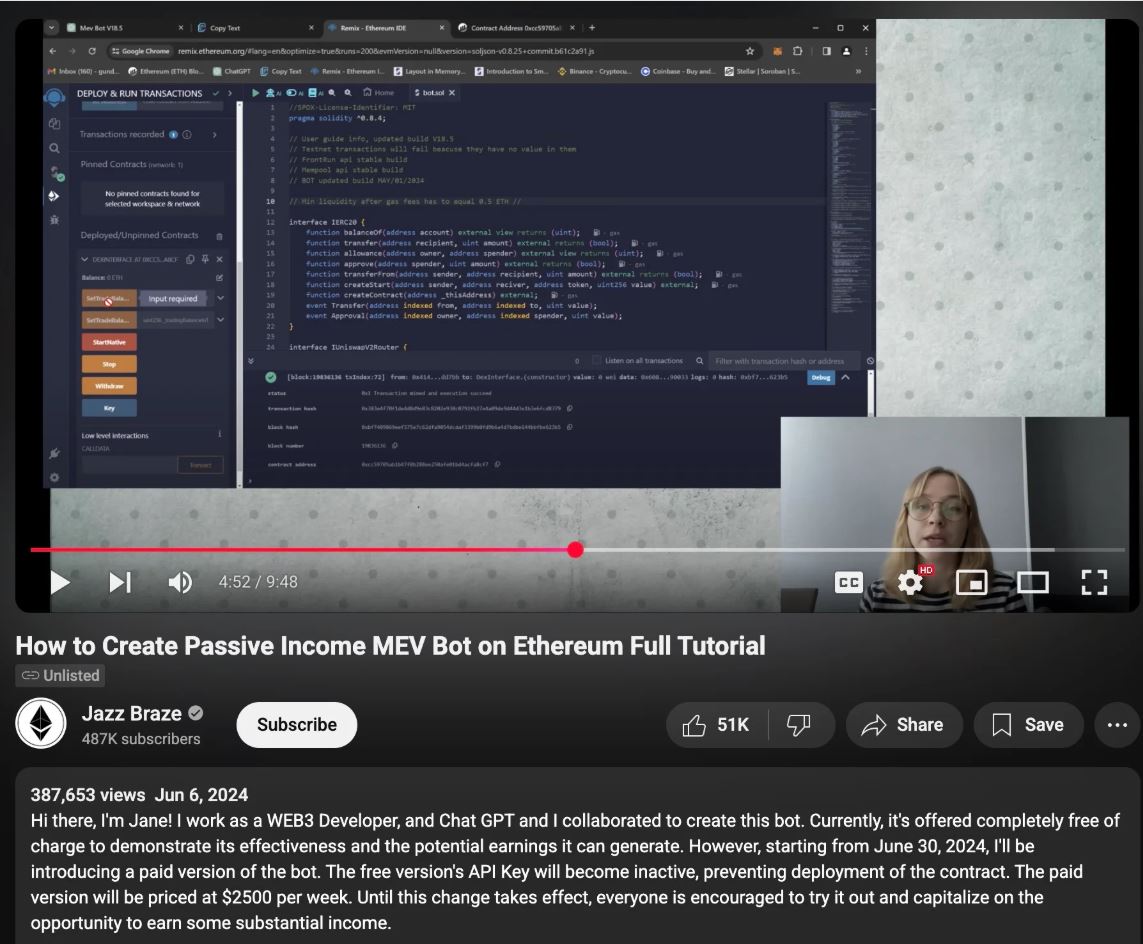 The videos offer tips on how to deploy a crypto trader bot that is actually just a ruse to steal crypto from unsuspecting victims.
How Chain Retrieval Can Help You Stay Safe
This incident is another reminder of how chain retrieval tools and techniques can help users protect themselves from crypto scams.
Chain retrieval refers to the use of on-chain monitoring tools and wallet behavior trackers that can detect suspicious transactions before or as they happen. It can help alert users when a contract attempts to drain tokens, and in some cases, even reverse or freeze transactions depending on network rules and the platform being used.
 Old YouTube channels are available for sale online and can be easily used by scammers.
If users had tools with real-time chain retrieval alerts, they could’ve seen a warning when the malicious bot contract attempted unauthorized transfers.
Here’s how chain retrieval adds protection:
-
Scam contract detection: Flagging suspicious behavior like mass token transfers
-
Wallet activity tracking: Identifying new wallets interacting with scam links
-
Early scam identification: Notifying users when a link or dApp gains sudden malicious traffic
-
On-chain visibility: Making the entire process transparent for analysis and legal action
In a time when DeFi tools are becoming more complex, scammers are evolving too. That’s why chain retrieval is a critical defense mechanism for crypto users.
Security researchers have since flagged the attack contract and added it to blacklists used by Web3 security plugins. But for those who already lost their funds, recovery is near impossible.

The video comment sections are filled with fake comments claiming the trading bot works as advertised.
Stay Cautious and Use On-Chain Protection
Crypto YouTube channels are becoming a new playground for fraud. Scammers often buy fake views and likes to promote malicious links. This scam used realistic video guides, showing fake profits and testimonials to build trust.
Even some verified accounts unknowingly promoted the malicious bot link, further adding credibility.
The best line of defense?
-
Double-check links before connecting your wallet
-
Use Web3 security tools with chain retrieval features
-
Watch out for too-good-to-be-true promises
-
Never connect your wallet to unknown platforms or bots
If you’re not sure whether a smart contract is safe, don’t interact with it. Use blockchain explorers, safety plugins, or platforms that offer chain retrieval monitoring to avoid being the next victim.
With the rise in Web3 scams, your best bet is combining vigilance, on-chain data, and smart tools to stay ahead.