

The Australian government revealed shocking statistics: since early 2023, authorities busted over 14,000 scams, with 21% involving fake crypto schemes. This surge highlights how cryptocurrency fraud has become one of the most damaging and fastest-growing forms of financial crime in the region.
Officials explained that the rise in Australia crypto scams comes from sophisticated social engineering tactics, fake investment platforms, and fraudulent projects promising unrealistic returns. At the same time, enforcement efforts continue to grow, but victims still lose millions to criminals who exploit gaps in awareness and blockchain protections.
How crypto scams are targeting Australians
Australia’s National Anti-Scam Centre reported that crypto scams have surged across multiple platforms. Scammers commonly rely on these methods:
-
Fake investment opportunities – Websites promise “guaranteed” returns on Bitcoin, Ethereum, or new altcoins.
-
Impersonation scams – Fraudsters pose as exchanges, brokers, or government agencies.
-
Romance scams – Scammers build trust over months, then pressure victims to “invest” in crypto.
-
Phishing links – Messages redirect users to fake wallet apps or dApps designed to steal login data.
Consumer watchdog ASIC continues to warn Australians about high-risk crypto investments. In 2024 alone, Australians reported over AUD 220 million in losses from crypto-related scams, according to Scamwatch.
The scale of these losses shows that crypto scams don’t happen as isolated incidents — they represent a systemic and growing threat.
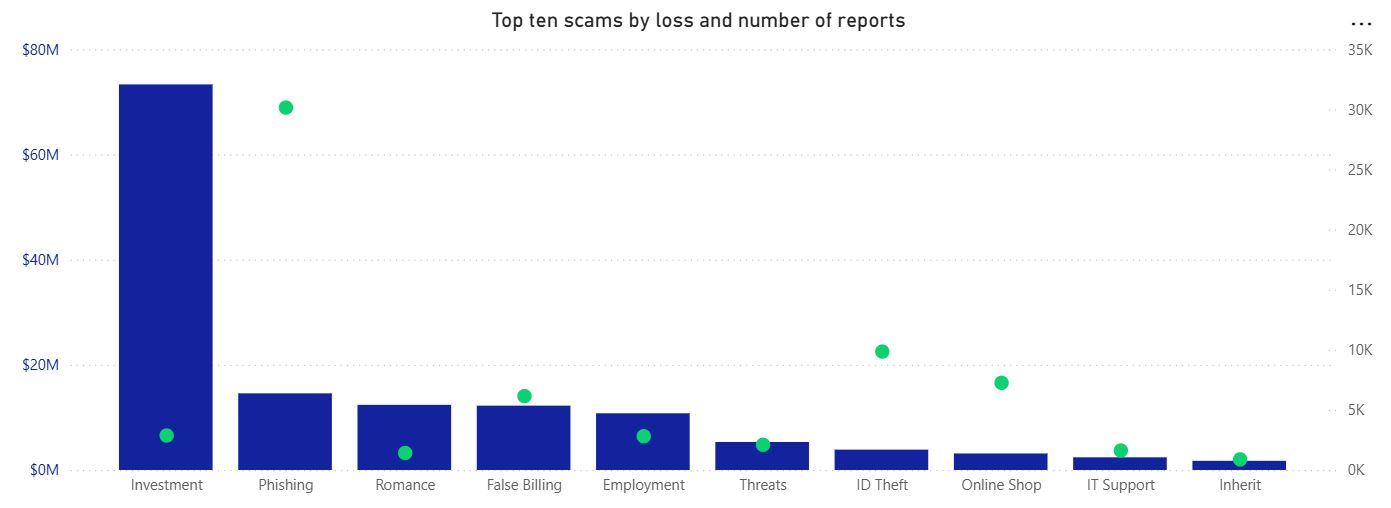
The total amount Australians have lost to investment scams appears to be trending downward with $73 million recorded so far this year, compared to $192 million in 2024. Source: National Anti-Scam Centre
Why fake crypto scams are effective
Fraudsters succeed because they know how to exploit both trust and urgency. Victims often fall for ads on social media platforms such as Facebook and TikTok, where scammers pose as legitimate companies or even celebrities.
Authorities have also identified several red flags that explain why so many Australians fall prey:
-
Guaranteed high returns with “no risk”
-
Fake endorsements from public figures
-
Requests to move funds off regulated exchanges
-
Pressure to act quickly before “missing out”
Once criminals receive funds, they route them through mixers or cross-chain swaps. This process makes recovery extremely difficult. That’s exactly where chain retrieval could play a game-changing role.
How chain retrieval can protect users
With thousands of Australians losing money, chain retrieval technology is emerging as a much-needed safeguard for the Web3 space.
Unlike traditional blockchains where transactions remain permanent, chain retrieval enables mechanisms to trace, reverse, and recover stolen funds.
Here’s how it could help victims of Australia’s crypto scams:
-
Undoing scam transfers – Retrieval protocols can flag fraudulent addresses and roll back transactions.
-
Building confidence – Users gain peace of mind knowing scams don’t always mean permanent loss.
-
Deterring criminals – If stolen assets get retrieved, scams become far less profitable.
-
Supporting enforcement – Authorities can work with blockchain networks to freeze and return funds.
Just as antivirus software became standard in the digital age, analysts argue that chain retrieval will soon be essential for crypto wallets and exchanges. For countries like Australia, where scams cause widespread financial harm, retrieval could significantly reduce victim losses.

The road ahead for Australia’s crypto security
The government pledged to intensify enforcement against scammers, shut down fake platforms, and cooperate with global partners. However, enforcement alone won’t solve the issue.
For investors, the lessons are clear:
-
Always verify platforms on ASIC’s official register.
-
Stay cautious of unsolicited offers, especially on social media.
-
Avoid promises of guaranteed returns — legitimate crypto investments always carry risk.
-
Choose wallets and exchanges that integrate chain retrieval as part of their security stack.
The rise of Australia crypto scams shows how quickly criminals adapt. At the same time, it highlights the urgent need for innovation. By combining awareness campaigns, regulatory enforcement, and blockchain-level solutions like chain retrieval, the ecosystem can move closer to protecting everyday users from devastating losses.