

$1.5M phishing exploit linked to Ethereum’s EIP-7702
Security analysts are sounding the alarm after a $1.5 million phishing exploit was discovered, tied to Ethereum’s new EIP-7702 upgrade.
The attack targeted unsuspecting crypto investors through fake decentralized apps (dApps) that mimicked trusted platforms. Victims were tricked into signing malicious wallet approvals, which gave hackers direct access to their assets. Within minutes, attackers drained ETH, stablecoins, and several valuable NFTs.
EIP-7702, originally proposed to improve wallet interactions by replacing EIP-3074, has quickly become a point of concern. While designed to simplify transaction execution, hackers are exploiting the new signing process to disguise phishing transactions, making it harder for users to detect red flags.
Blockchain analysts warn this exploit is not an isolated case. Phishing attacks are rapidly evolving to take advantage of Ethereum upgrades and new user workflows, putting millions at risk if better protections are not adopted.
How Chain Retrieval protects against phishing attacks
The $1.5M phishing exploit highlights a painful truth: even improvements to Ethereum can open new attack vectors. But experts say that Chain Retrieval crypto protection could provide a much-needed safety net.
Chain Retrieval is a blockchain security technology that helps detect, flag, and recover stolen assets from phishing or exploit-based transactions. Unlike traditional methods that rely on centralized exchange cooperation, Chain Retrieval works on-chain, giving power back to users.
Here’s how Chain Retrieval could have prevented or reduced losses in the EIP-7702 exploit:
-
Real-time detection – Scans transactions for malicious approval requests and alerts users instantly.
-
On-chain recovery – If a phishing attack occurs, Chain Retrieval can trace stolen funds and initiate asset retrieval before they are laundered.
-
NFT protection – Ensures that high-value collectibles are monitored and flagged if moved under suspicious conditions.
-
Cross-chain defense – Protects assets not only on Ethereum but also on other major blockchains like Solana, Polygon, and Layer-2 networks.
If Chain Retrieval had been integrated into victim wallets, the fake dApps would have been flagged immediately, preventing users from signing harmful approvals. Even in cases where assets were stolen, on-chain retrieval could have frozen or traced funds before they disappeared.
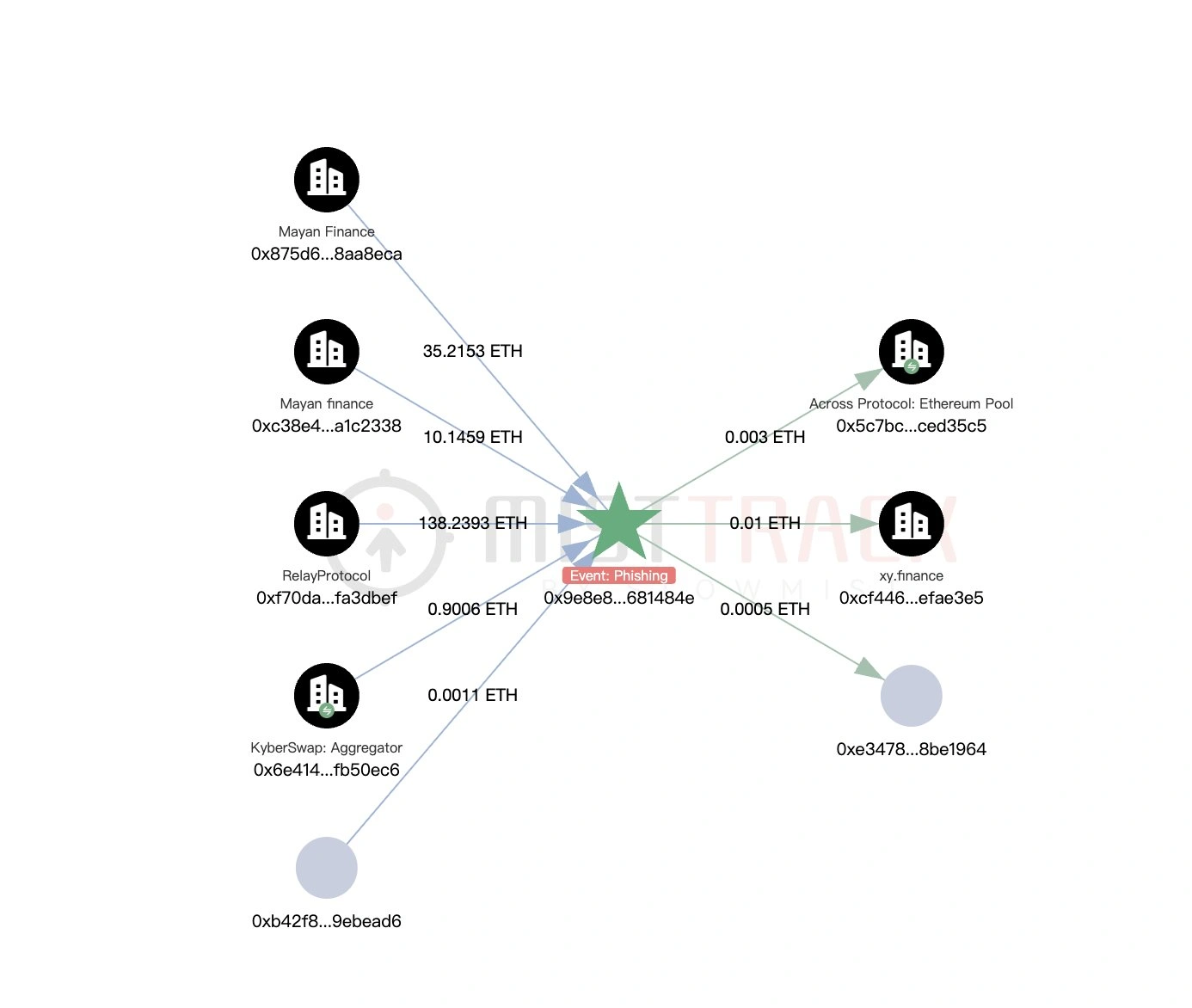
Exploiters bridged the stolen funds to Mainnet via Relay Protocol. Sourcce: @realScamSniffer (X/Twitter)
Why EIP-7702 phishing is dangerous for Web3
The exploit tied to EIP-7702 demonstrates a broader issue in the crypto space: every innovation creates new opportunities for attackers. Ethereum developers introduced the proposal to streamline how wallets handle transactions, but hackers quickly adapted by designing scams that look legitimate.
Key reasons EIP-7702 phishing is particularly dangerous:
-
Users are unfamiliar – Many investors don’t fully understand the new signing flow.
-
Fake dApps look identical – Phishing sites mimic popular platforms like Uniswap or OpenSea.
-
Hidden approvals – Transactions look harmless but grant full access to a wallet’s funds.
-
Rapid fund movement – Stolen assets are quickly moved across chains to obscure the trail.
Without strong protective measures, more investors could fall victim as EIP-7702 adoption increases.
Protecting yourself in the new crypto landscape
To avoid becoming the next victim of a phishing exploit, analysts recommend combining safe practices with advanced security tools:
-
Always double-check dApp URLs before connecting your wallet
-
Verify smart contract addresses on Etherscan
-
Regularly review and revoke token approvals using Revoke.cash
-
Use wallets with integrated security monitoring
-
Adopt solutions like Chain Retrieval crypto protection for an added layer of defense
The $1.5M loss tied to Ethereum’s EIP-7702 is a stark reminder that crypto users are their own first line of defense. But with Chain Retrieval technology, the community now has a way to fight back against phishing attacks and recover assets that would otherwise be gone forever.
As Ethereum continues to innovate, balancing progress with protection will be critical for the long-term safety of investors.