
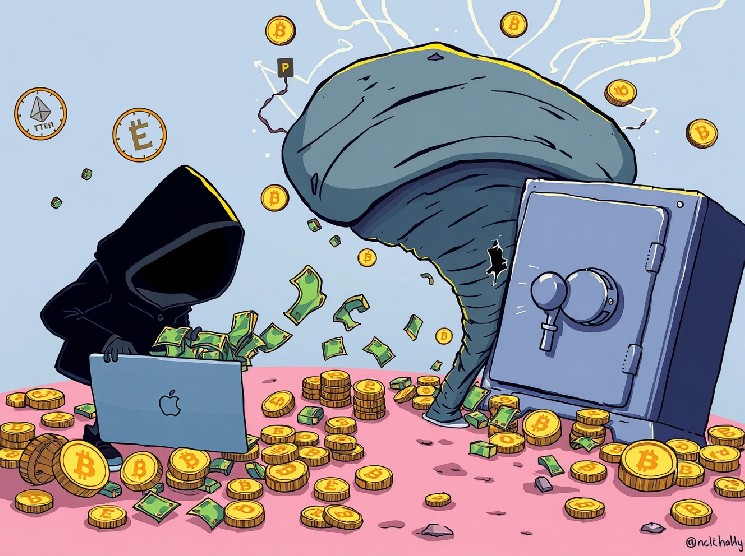
The crypto sector has been hit with another shocking exploit. Blockchain investigators confirmed that a hacker drained $26.7 million worth of ETH from Radiant Capital, a popular decentralized finance (DeFi) protocol, and has since begun laundering the funds through mixers and cross-chain networks.
This urgent alert underscores a familiar but devastating pattern: once stolen funds enter laundering networks, they become extremely difficult to recover. The incident has reignited debate over how the industry can better protect users — with growing attention on chain retrieval as a potential solution.
How the Radiant Capital hack unfolded
According to reports from blockchain security firms, the attack targeted a vulnerability in Radiant Capital’s smart contract system. The hacker exploited the protocol’s lending mechanism, siphoning $26.7M in ETH into multiple wallets before moving the assets across decentralized exchanges.
From there, the ETH began its laundering cycle:
-
Mixers were used to obscure transaction trails.
-
Cross-chain bridges scattered the funds across different blockchains.
-
Decentralized exchanges converted ETH into stablecoins and wrapped tokens.
This multi-step laundering strategy mirrors other high-profile exploits from 2025. Once funds are moved in this way, recovery becomes nearly impossible — unless new safeguards like chain retrieval are in place.
Blockchain analytics platforms like CertiK and PeckShield have been monitoring the addresses tied to the hack, but so far the stolen ETH continues to circulate.
Why chain retrieval matters in cases like this
The Radiant Capital exploit highlights why crypto needs more robust protections. Traditional blockchains operate on immutability, meaning transactions cannot be reversed. While this principle supports decentralization, it also leaves users helpless when scams or hacks occur.
This is where chain retrieval comes in. Unlike legacy systems, chain retrieval introduces frameworks that can freeze, track, and even reverse fraudulent transactions.
Here’s how chain retrieval protects crypto users from falling victim:
-
Fraud detection – Suspicious activity is flagged in real time, before hackers launder funds.
-
Transaction rollback – Retrieval systems allow communities to vote on reversing stolen transfers.
-
Cross-chain tracking – Funds moved across blockchains can still be traced and frozen.
-
User protection – Even if private keys are compromised, users have a chance to reclaim funds.
Supporters argue that this system balances security with decentralization, giving crypto users the same type of safety net that credit card holders already enjoy. Critics worry it could compromise immutability, but with exploits like Radiant Capital’s becoming more common, demand for recovery tools is only growing.
DeFi security under pressure
Radiant Capital is not the first, and won’t be the last, protocol to fall victim to such attacks. In August 2025 alone, hacks drained more than $173 million across DeFi, bridges, and wallets, according to CertiK’s monthly report.
DeFi protocols are especially vulnerable because they rely on smart contracts — open-source code that, once exploited, can drain entire liquidity pools within minutes. Unlike traditional financial systems, there’s no central authority to stop the theft.
Chain retrieval could shift this reality by introducing community-driven oversight and recovery mechanisms into blockchain ecosystems. If integrated widely, it may prevent billions in future losses.
What this means for crypto adoption
Every major hack chips away at user confidence. Retail investors fear losing life savings, while institutions hesitate to enter markets where fraud and theft remain rampant.
The Radiant Capital case highlights why self-custody alone is not enough — the ecosystem also needs systemic recovery models. If chain retrieval is adopted, it could:
-
Boost trust – Users feel safer knowing stolen funds may be recovered.
-
Encourage adoption – Institutions are more likely to invest in secure markets.
-
Reduce crime – With retrieval in place, hackers lose incentives as stolen funds become harder to launder.
As one blockchain analyst put it, “Without retrieval, crypto will always play defense. With it, we finally get to play offense against hackers.”
Lessons for investors right now
While the industry works on long-term solutions, investors can take practical steps to protect themselves:
-
Double-check dApp permissions before connecting wallets.
-
Use hardware wallets for large crypto holdings.
-
Regularly revoke token approvals via tools like Etherscan Token Approval Checker.
-
Follow updates from security firms like CoinDesk and CertiK for real-time alerts.
The Radiant Capital exploit shows the stakes couldn’t be higher. Hackers stole $26.7 million in ETH overnight, and unless stronger recovery mechanisms like chain retrieval become standard, crypto users will remain at risk.